Textile Institute Professional Publications Series | November 21, 2022 | By Robert Mather, John Wilson
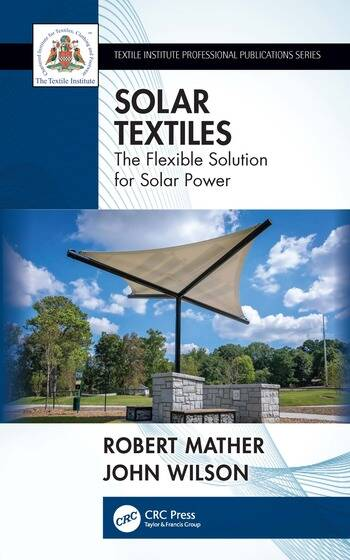
Featured on the cover, the authors discuss Pvilion’s PV fabric technology and products throughout the book.
Book Description
Most photovoltaic (PV) installations utilise heavy conventional glass or polycarbonate panels, and even newly developed thin plastic or metal films for PV cell use may fracture during both construction and application. Textile fabrics, the most widespread flexible materials in everyday use, offer a solution to the need for lightweight, flexible solar PV generators. Solar Textiles: The Flexible Solution for Solar Power is about the incorporation and operation of solar cells on textile fabrics. The combination of textile manufacturing and solar PV cell technology opens up further avenues for both the textile and semiconductor industries. Thus, this book reflects the progressively increasing commercial interest in PV cell technology and the versatility that their integration in textiles provides.
Discusses textiles as electrical substrates
Explains the photovoltaic effect and associated parameters
Offers special consideration of solar cells on textiles
Compares fibres and fabrics and how to implement PV activity on a textile
Describes manufacturing methods outside of semiconductor technology
Includes applications open only to textiles
This work is aimed at textile technologists, electronic engineers, solar technologists, civil engineers and designers in building fabrics and architecture.
The Architectural Products Design Awards recognizes and awards the greatest architectural product designers and manufacturers. It seeks to celebrate the ingenuity of products and materials that make great architecture possible, and shine a light on those who create well-made, functional, long lasting, sustainable, beautiful and innovative products.
Lead Designer: Todd Dalland
Company/Studio: Pvilion
Team Members: Colin Touhey, Robert Lerner
Client: Florida Power and Light
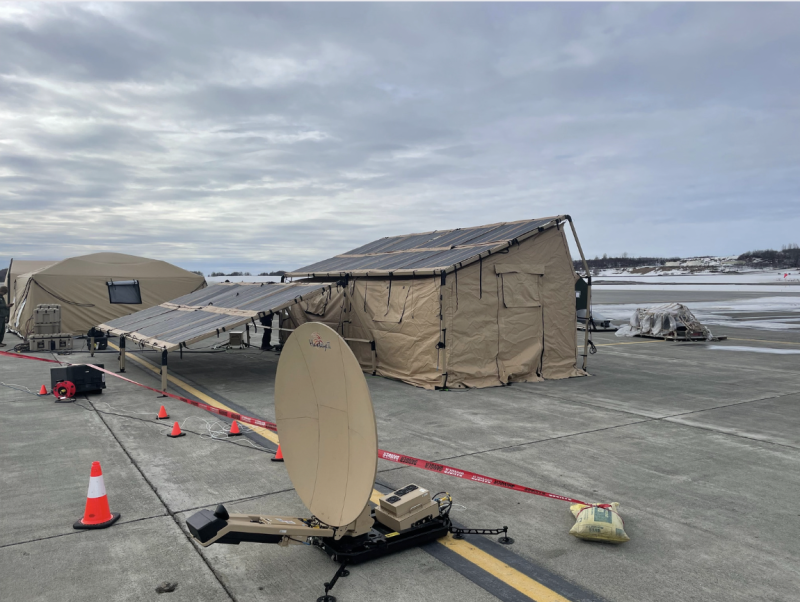
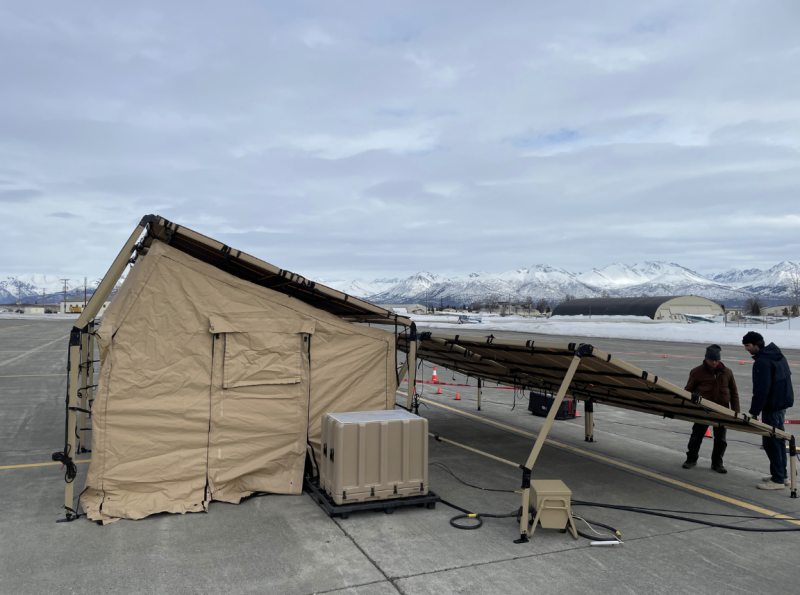
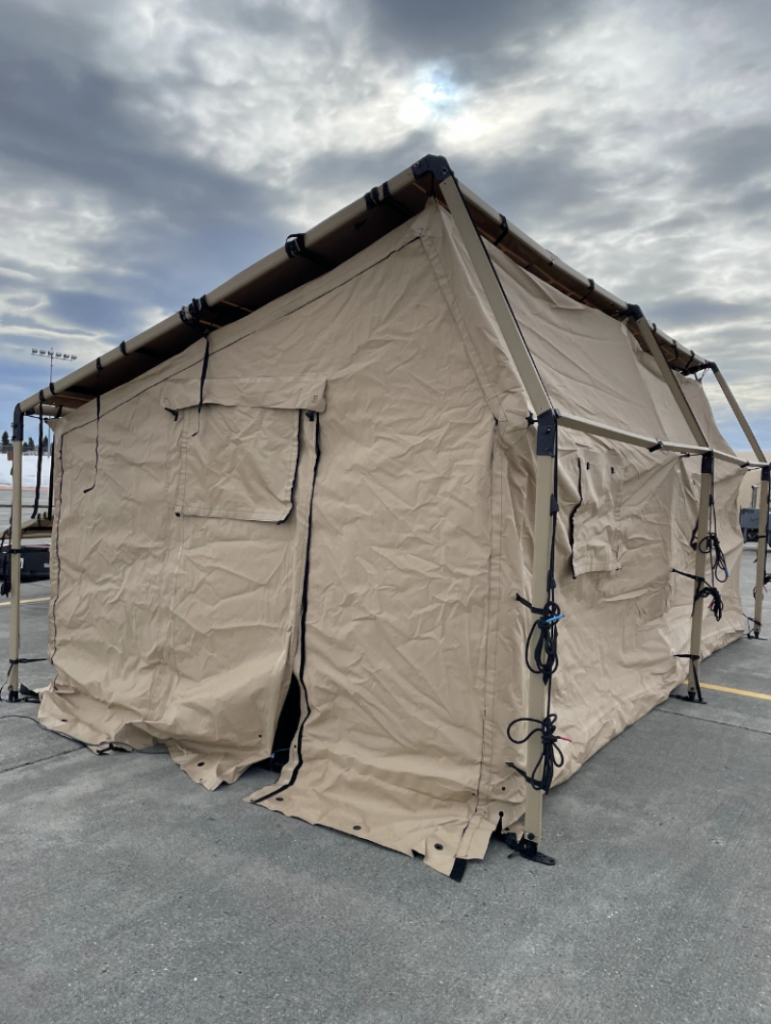
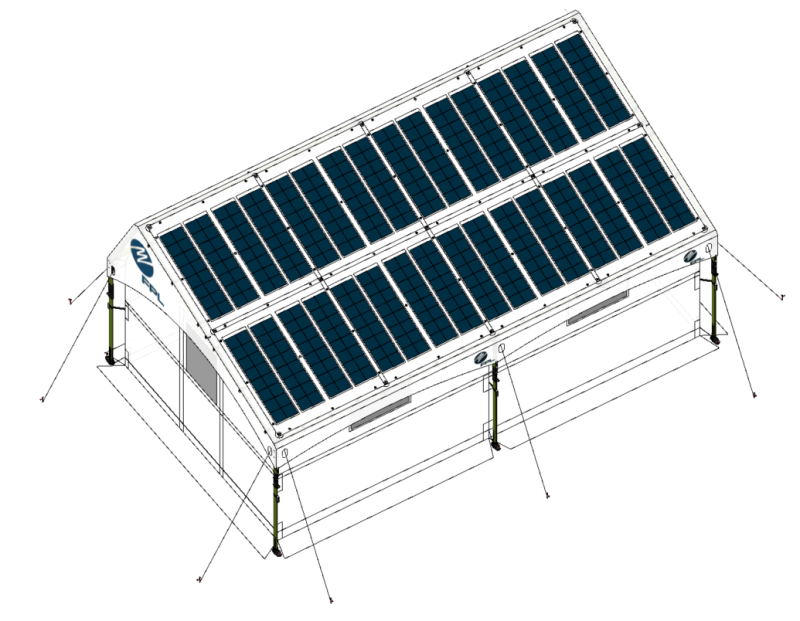
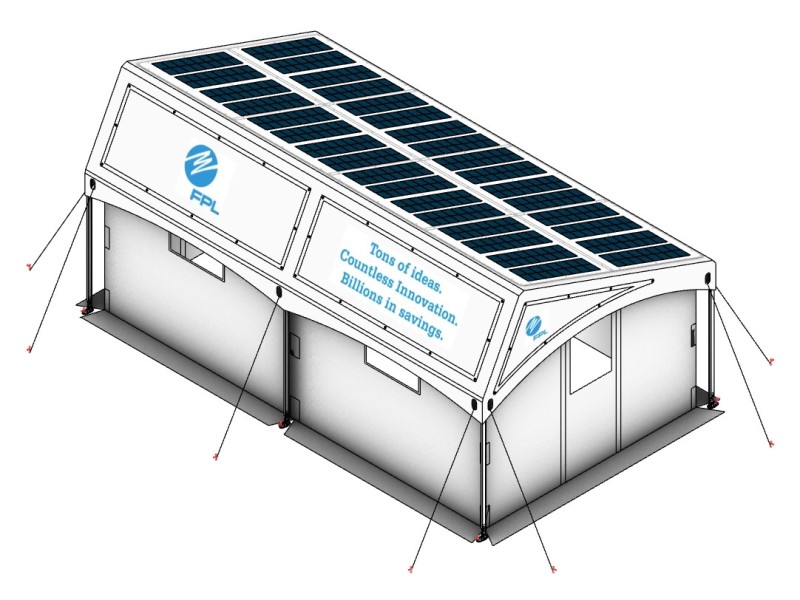
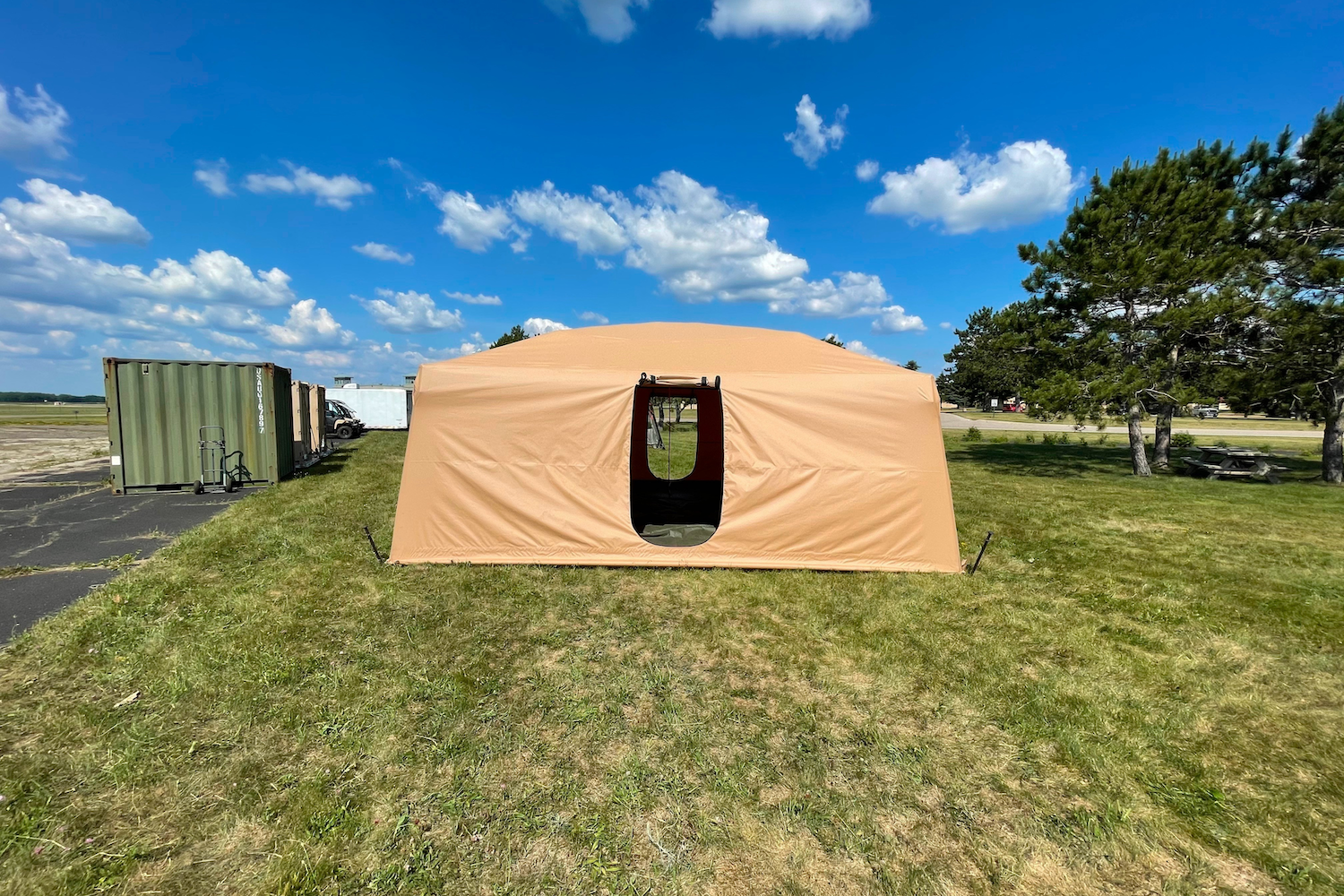
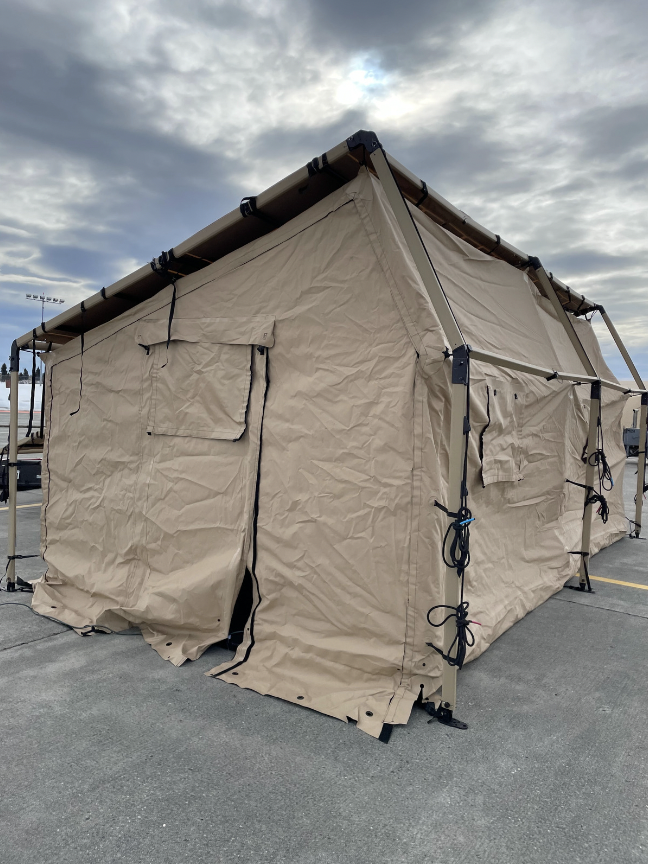
This product conveniently aligns shelter, solar, and energy storage to offer a fully off-grid system that can function in almost any setting. The fabric featured on this structure is Pvilion’s signature solar cell integrated fabric, meaning that these tents can generate power for emergency response, disaster relief, lighting, environmental controls, and electrical devices, fully independent from the grid. Its convenient design allows for easy set-up, transport, and function. The lightweight tent offers 200 square feet of usable space and can be fully erected in 20 minutes.
15th Wing | Oct. 26, 2022 | By Tech. Sgt. Anthony Nelson Jr.
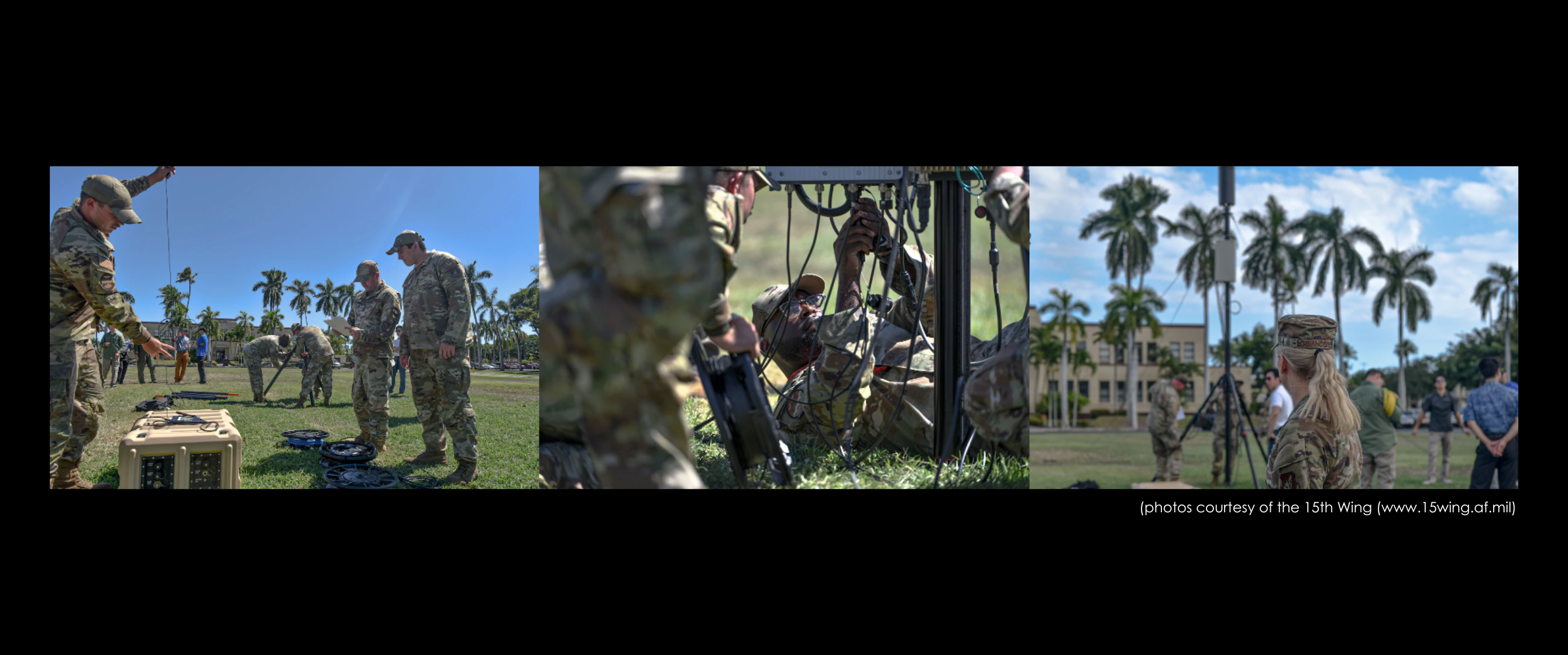
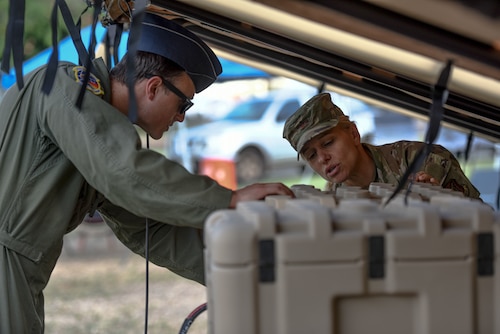
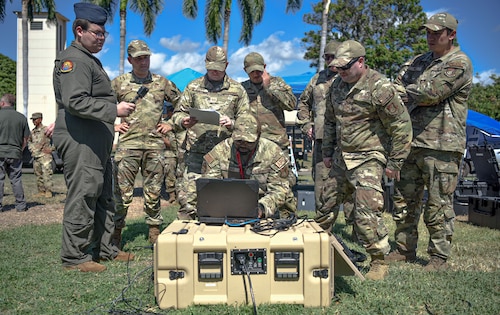
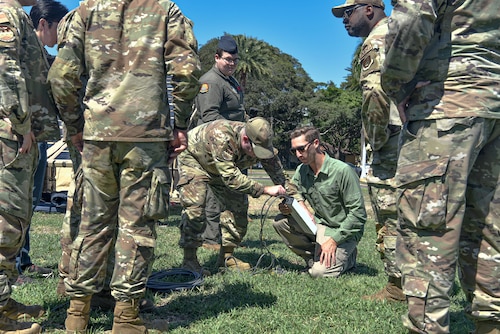
JOINT BASE PEARL HARBOR-HICKAM, Hawaii — Airmen from the 15th Wing innovation cell, Aloha Spark, host an innovation demonstration, highlighting emerging technologies at Joint Base Pearl Harbor-Hickam, Hawaii.
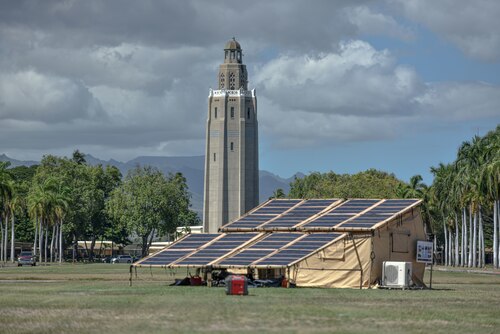
The demonstration allowed leaders to see a real-time application in cross-capability technologies such as the portable operations network integrator and the solar powered expeditionary tent system.
“The 15th Wing and AFWERX (a Technology Directorate of the Air Force Research Laboratory (AFRL) leadership understand and emphasize the importance of working quickly in the Indo-Pacific theatre. Our accelerate change or lose model gives us a forward-edge approach by combining capabilities and teaming innovative technology with warfighters,” said U.S. Air Force Capt. Bryan Anderson, 15th Wing innovation chief.
Aloha Spark’s construct enables the innovation cell to be a pathway for collaboration and integration between the warfighter and the AFWERX network.
“When we look at the innovation ecosystem, often the technologies we need already exist. Aloha Spark saw a variety of technological solutions that we could integrate with for real-world operations,” Anderson said.
The demonstration showed technological solutions for the warfighter but further revealed the adaptability of multi-capable Airmen and their ability to bring agile combat employment principles to the frontline.
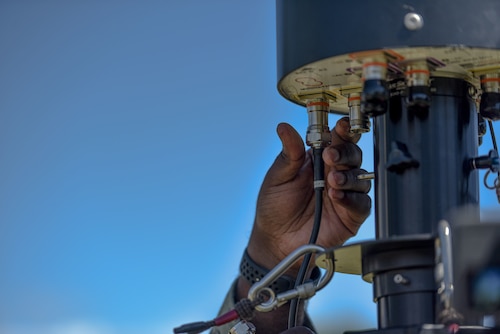
Airmen from the 15th Aircraft Maintenance Squadron received training from the Naval Information Warfare Center on the PONi system as part of the demonstration. These Airmen consist of several Air Force specialty codes that include; flying crew chiefs, crew chiefs, hydraulic systems specialists, maintenance production, and aircraft electrical and environmental systems specialists.
“The PONi rapidly increases our range with inbound and outbound aircraft. The communication capabilities are not just radio but 5G internet capabilities, communication with aircraft and electronic devices,” said Staff Sgt. Seth Scott, 15th Aircraft Maintenance Squadron crew chief.
Scott added that receiving the training on the PONi system gives MCA’s the confidence needed to implement new capabilities while decreasing their footprint in an austere environment.
The SPETS system was also demonstrated. It provides the versatility needed for multipurpose usage in various environments. According to the Air Force Rapid Global Mobility office, SPETS has the ability to retrofit to meet the needs of commanders and contingencies such as personnel lodging, command center, storage facility, medical staging area, and more in various locations.
“SPETS and PONi allow MCA’s to disperse and set up a resilient and mobile command center that will give commanders quicker access to information and communication efforts while in various locations to meet the need for the future fight,” Lt. Col. Karman Khalidi, 15th Maintenance Group deputy commander.
The MCA concepts focus on teaching skill sets outside of one’s respective career field. For Staff Sgt. Dan Kosty, 15th Maintenance Squadron crew chief, this demonstration offered an opportunity to incorporate 3D printing skills acquired while assigned to Aloha Spark and show practical cross-utilization inside the SPETS.
“Having the capability to generate our energy with SPETS away from a main operating base gives us the advantage. A system like this, tethered with current technologies such as 3-D printing will allow Airmen to produce specialized applicable and agile tools for any airframe and weapons system within our forward operating region,” said Kosty.
The U.S. Air Force defines agile combat employment as a way of operating that relies less on large traditional main overseas bases as hubs for projecting combat power and more on launching, recovering, and maintaining aircraft from dispersed forwarded operating locations in concert with allies and partners.
“Demonstrations like these are great conversation starters that allow us to ask the question; how might we strengthen ACE capabilities locally?” Anderson said. “The demonstration also validated the need to further implement our multi-capable Airmen into strategies that allow us to continue ensuring our ability to maintain peace, stability and security in the Indo-Pacific.”
For more than 75 years, the International Achievement Awards (IAA) recognize outstanding and innovative projects representing the latest accomplishments in design and manufacture incorporating specialty fabrics. The 42-category competition, sponsored by IFAI since 1946, is an excellent opportunity for IFAI members and non-members to display work, gain professional recognition and become distinguished on an international level.
The IAA’s have recognized technical skill and design excellence in projects across the industry that incorporate specialty fabrics into their design. Entries are judged by industry experts and design professionals who are individually selected for their expertise in a particular field of study or product area. To view the IAA website, click here.
For more than 75 years, the International Achievement Awards (IAA) recognize outstanding and innovative projects representing the latest accomplishments in design and manufacture incorporating specialty fabrics. The 42-category competition, sponsored by IFAI since 1946, is an excellent opportunity for IFAI members and non-members to display work, gain professional recognition and become distinguished on an international level.
The IAA’s have recognized technical skill and design excellence in projects across the industry that incorporate specialty fabrics into their design. Entries are judged by industry experts and design professionals who are individually selected for their expertise in a particular field of study or product area. To view the IAA website, click here.
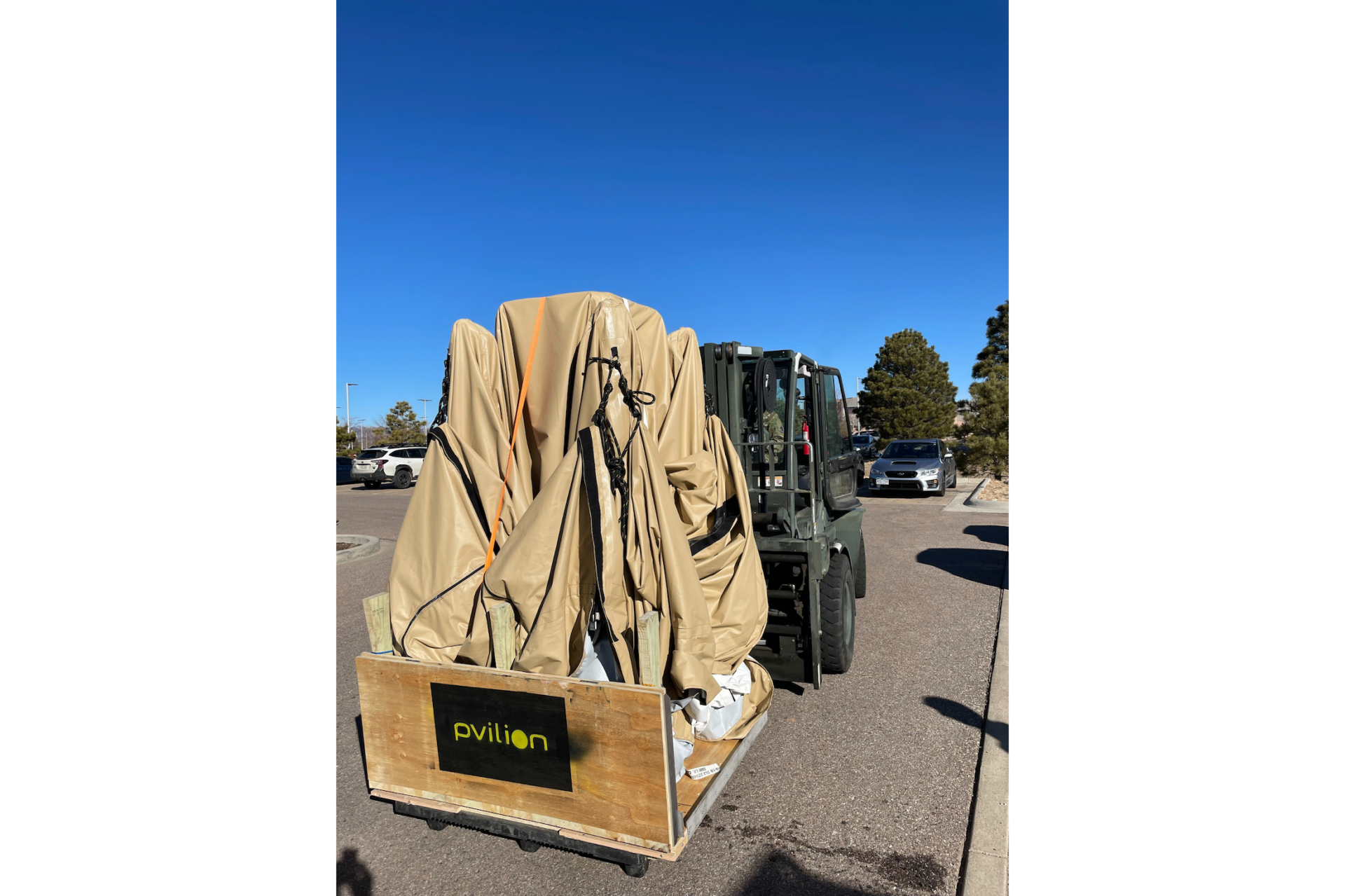
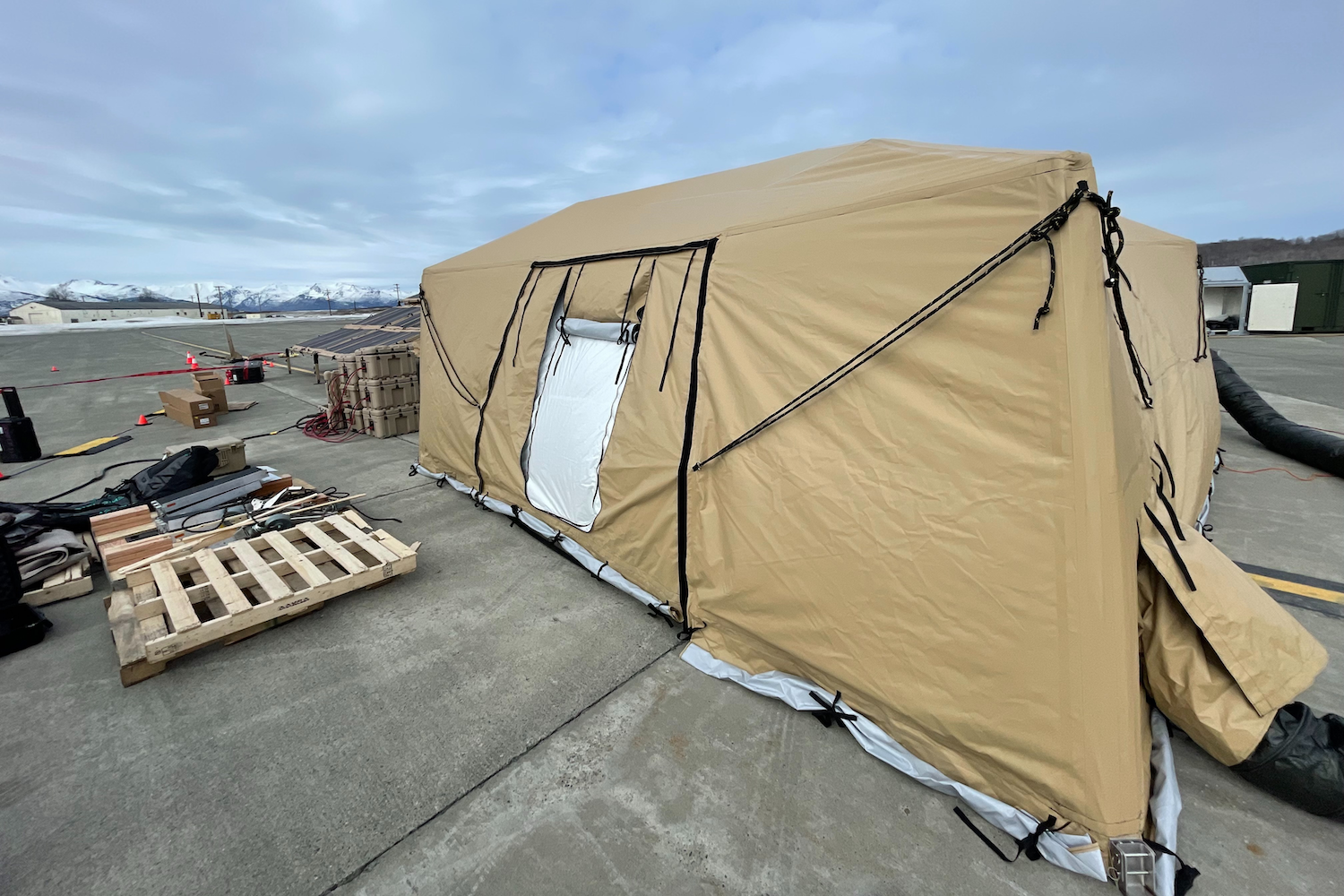
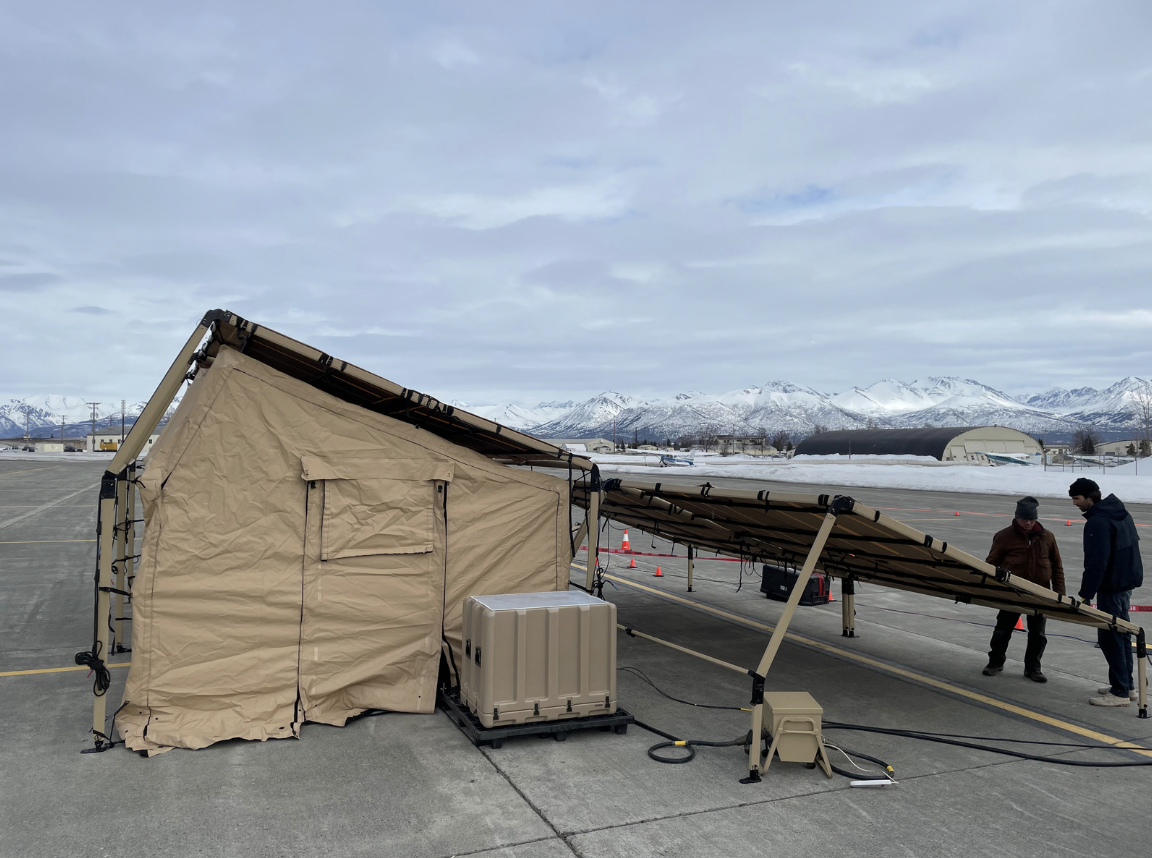
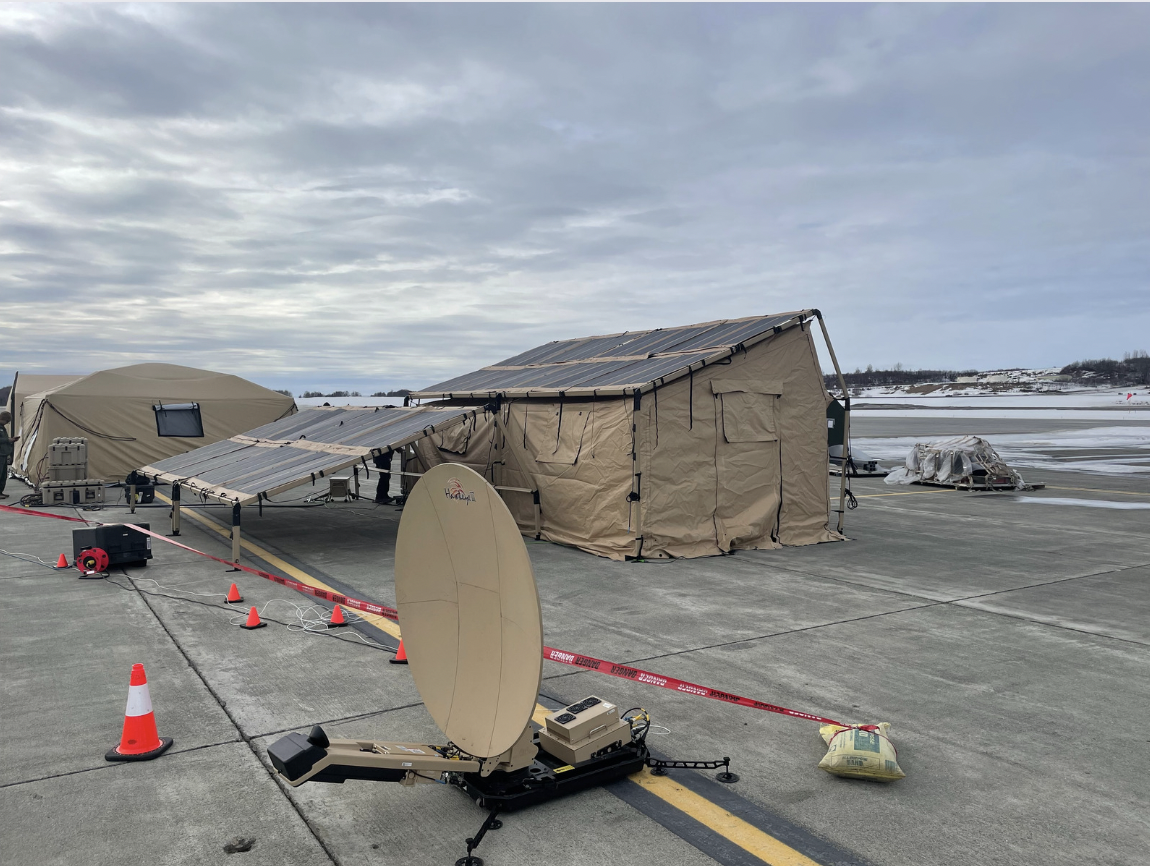
Pvilion’s Solar Powered Expeditionary Tent System is the first product of its kind to conveniently align solar, energy storage, cooling, and heating, to offer a fully off-grid expeditionary system that can function in any setting. The fabric used on this structure is Pvilion’s signature solar cell integrated fabric, meaning that these tents can generate sustainable power for communications, lighting, environmental controls, and electrical devices fully independently from the grid. It is a highly capable shelter that has solar fabric, integrated tent, floor, and liner for thermal performance. It is immediately operational in any environment. Its convenient design allows for easy set-up, transport, and function. The lightweight tent offers 200 square feet of usable space and can be fully erected in 20 minutes.
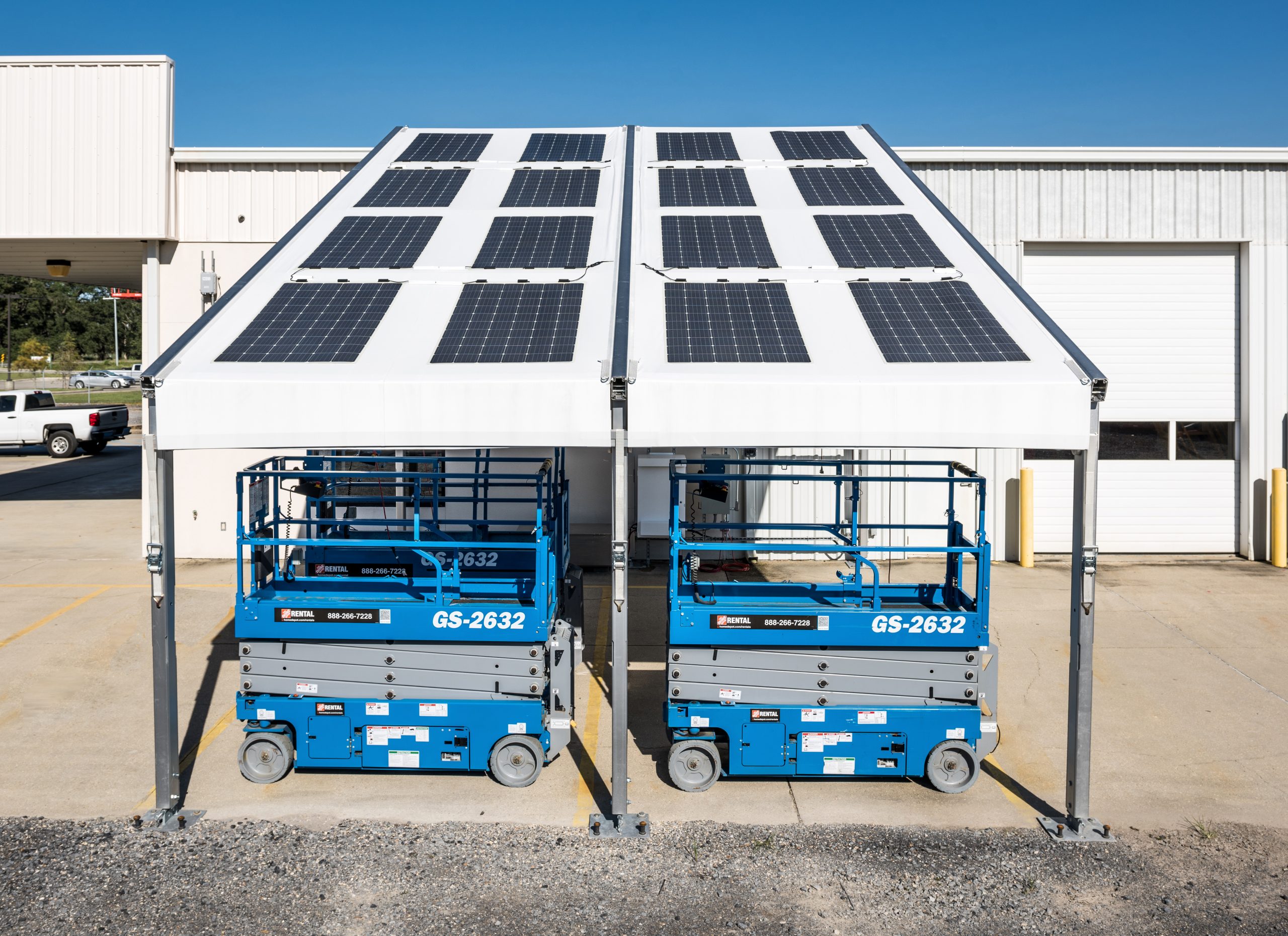
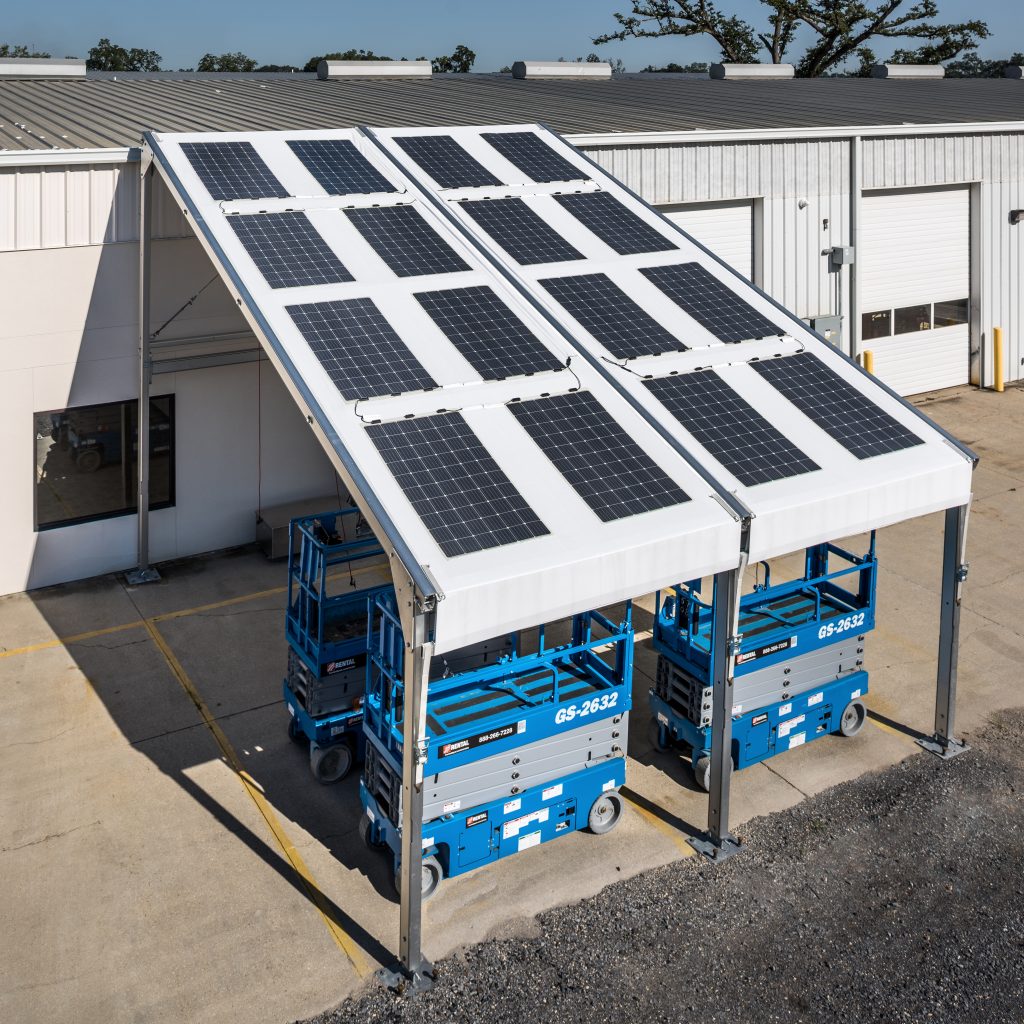
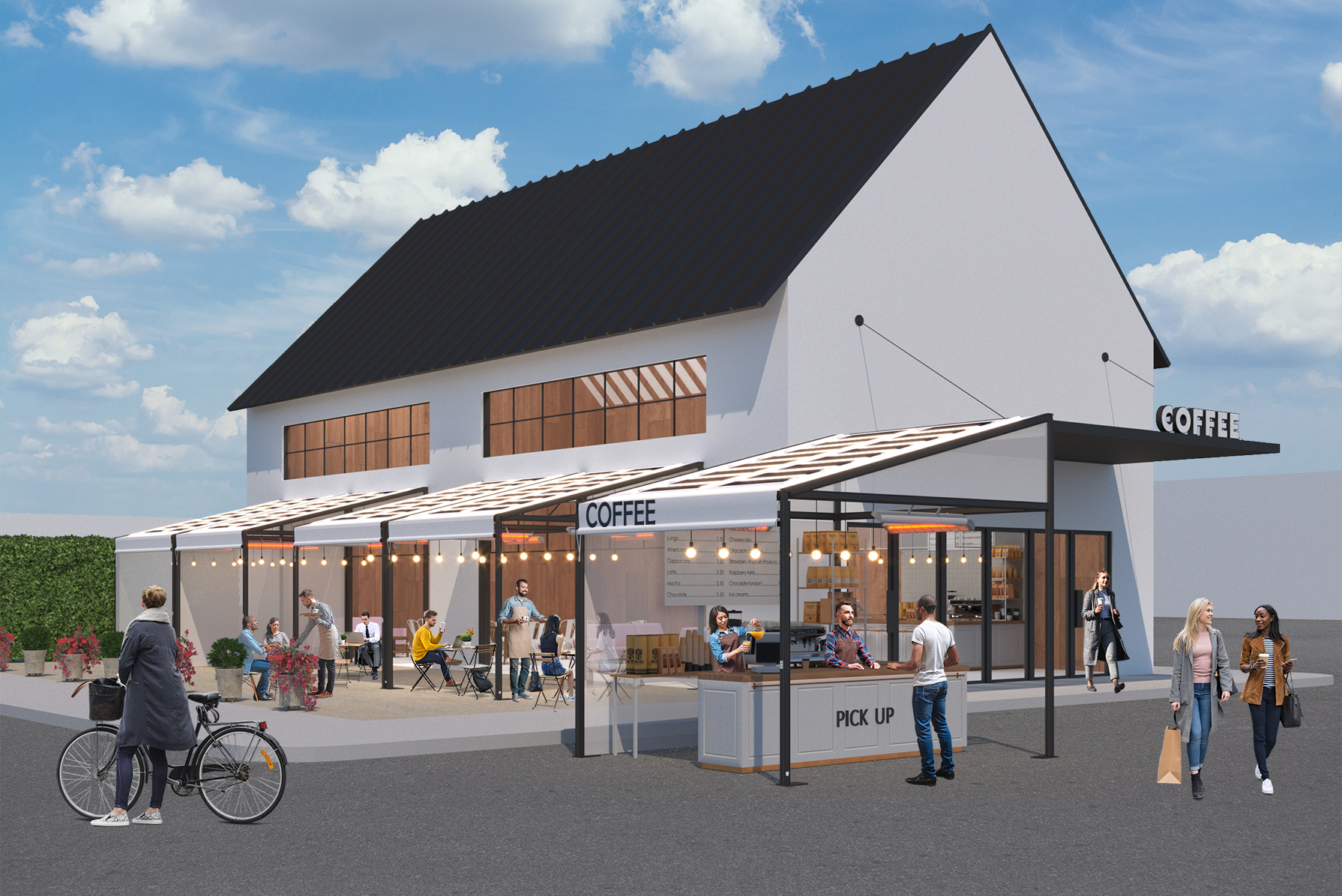
Fully relocatable and integrated with lightweight solar powered fabric, Brooklyn-based Pvilion’s Lightweight Solar Canopy can provide sustainable power anywhere that receives sunlight. This unique application of solar eliminates the need of having two separate systems for shade/shelter and sourcing power. Pvilion integrates solar power into fabric to achieve one turn-key product that provides visually appealing shade as well as outlets for charging, lighting, ventilation, climate control all in an easy to install manner. Easy to set-up and relocate, this product offers flexibility and independence to those that utilize this sustainable fabric product.
Pvilion’s Hands-Off Expeditionary Tent (HEXT) is a rapidly deployable shelter system built with defense, industrial and commercial applications in mind. This tent has been developed by Pvilion for the USAF in support of additive manufacturing, space operations, and expeditionary forces. Its advanced design reduces the labor, manpower, and time required to erect and dismantle temporary shelters for austere and remote environments. The structure can be entirely deployed at the push of a button without human intervention in less than three minutes. Where large labor forces and much time were previously required, the Hands-Off Expeditionary Tent structural system allows for fewer logistics operators managing more parallel processes. This rapid sequence allows more time to focus on mission accomplishment and less time required for logistics and setup. The tent fully erects itself in a matter of minutes, literally with the push of a button. It features walls, doors, optional solar powered integrations, and allows for plenty of space for meetings and operations to take place.
Soon Pvilion canopies will keep patrons of the Mosholu Golf Course driving range cool in the shade, as they practice directly above the Croton Water Filtration Plant.
Pvilion on the Course
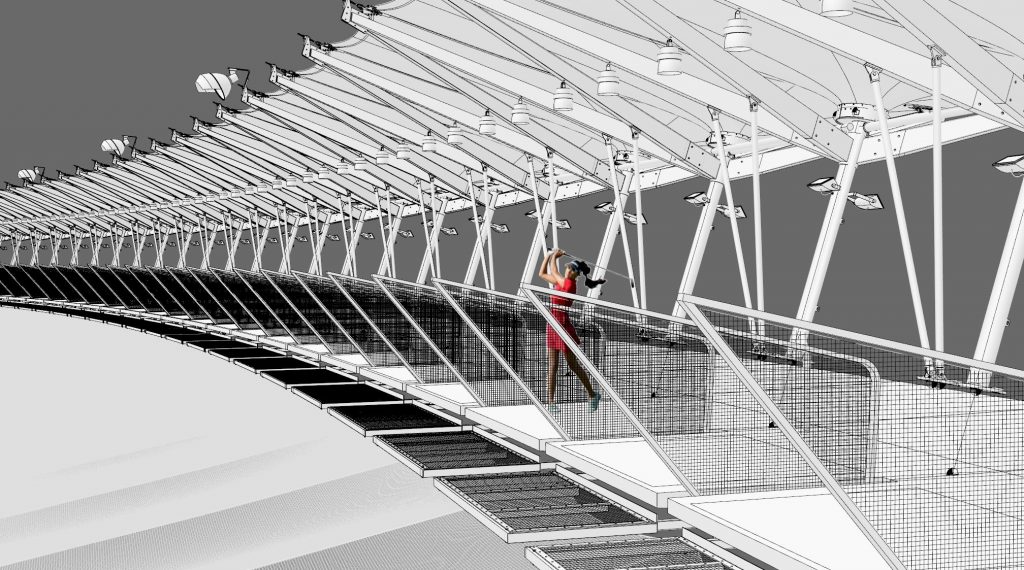
Construction on this project with its fully sustainable “living roof” began again in 2015. The driving range located within the golf course features natural water elements, inspired by the native habitats found in the park. Featured on the driving range directly above the water treatment plant, will be 31 Pvilion canopies. These canopies will shade patrons that utilize the driving range in the golf course.
Rendering of the upcoming project by Pvilion
What is the Croton Water Filtration Plant?
The Croton Water Filtration Plant, located in the Bronx, is the first water treatment plan located within New York’s boroughs. Not only is it the oldest water supply system in New York City, but it is also the largest underground water filtration plant in the United states. The plant stretches for twelve acres beneath the ground, located beneath the Mosholu Golf Course inVan Cortlandt Park
Fully Hidden Underground
Responsible for processing a third of the city’s drinking water, The Croton is one of the largest infrastructure projects in New York City. Fully underground, the treatment plant is 12 stories tall. You would never know it from above, though. On the surface, all that’s visible are wetlands, park grounds, and golf course.
To learn more about the Croton Water Filtration Plant Project, click here.